


 +86 18681836350
  info@monokj.com




When conventional wrought alloys cannot provide enough strength retention under prolonged high-temperature loading, casting superalloys are often selected for components with complex geometries and severe thermal conditions.
Inconel 713C is a nickel-based casting superalloy developed for high-temperature applications where creep resistance, stress rupture strength and oxidation resistance are critical. Its cast structure and excellent thermal stability make it suitable for complex components exposed to extreme heat, especially in aerospace engines, gas turbines and other high-temperature equipment.
Mono supplies Inconel Alloy 713C materials and customized casting solutions for customers requiring high-performance nickel alloys for turbine components, precision cast parts and heat-resistant engineering applications.
| Composition | C | Si | Mn | P | S | Cr | Ni | Mo | Al | Ti | V | B |
| Min | \ | \ | \ | \ | \ | 13.00 | 24.50 | 1.00 | \ | 2.40 | 0.01 | 0.005 |
| Max | 0.06 | 0.75 | 0.35 | 0.025 | 0.025 | 16.00 | 28.50 | 1.75 | 0.35 | 3.20 | 0.10 | 0.025 |
| Rigidity | Tensile strength | Yield strength | Elongation |
| 220HB | ≥980MPa | ≥490MPa | ≥30% |
| Density | Melting points | Specific heat | Magnetism | Resistivity | Thermal conductivity | Linear expansivity |
| 8.03g/cm3 | 1330℃ | 19.27J/(Kg.℃) | \ | 0.863Ω·mm²/m(20℃) | 12.2-26.4W/(m.k)(100-900℃) | 19.27×10⁻⁶/K(20-800℃) |
1. GB/T 14992 Superalloys – (Classification and Specifications)
Type: Wire / Bar / Forging / Rod
Size Range:
Inconel 713C Wire: 0.5 – 15.0 mm dia
Inconel 713C Bar: 8 – 355 mm dia
Inconel 713C Forging: Custom sizes available
Surface: Annealed, Pickled, Ground, Turned
Testing: Chemical analysis, mechanical test (tensile strength, yield strength, elongation), high-temperature stress rupture test, hardness test, dimensional inspection
2. AMS 5391 / ASTM A567 (Standard Specification for Precipitation Hardening Nickel-Based Superalloys)
Grade: GH2136 / Inconel 713C / Ni-Cr based precipitation hardening alloy
Type: Wire / Bar / Forging / Rod
Size Range:
Inconel 713C Wire: 0.5 – 15.0 mm dia (coils or straight)
Inconel 713C Bar: 8 – 355 mm dia (hot rolled or cold drawn)
Inconel 713C Forging: Custom sizes per customer drawing
Surface: Annealed, Pickled, Ground, Polished
Testing: Chemical analysis, mechanical test (tensile, yield, elongation), high-temperature stress rupture test, hardness test, ultrasonic test (for bar), dimensional inspection
1. Aerospace Engine Components
Aircraft engines operate under extreme temperatures, high rotational stress and repeated thermal cycling. Materials used in these areas must maintain strength and resist degradation over long operating periods.
Inconel 713C is widely considered for:
Turbine blades
Jet engine components
Combustion-related parts
High-temperature aerospace castings
Its casting characteristics allow manufacturers to produce complex engine components while maintaining high-temperature mechanical performance.
2. Gas Turbine Components
Gas turbine systems require materials capable of handling hot gas exposure and continuous thermal stress.
Inconel 713C casting alloy is suitable for:
Gas turbine blades
Turbine rotor components
High-temperature turbine parts
Power generation components
The alloy provides reliable creep resistance and oxidation protection in demanding turbine environments.
3. Precision Casting Components
Some high-temperature applications require complex shapes that cannot be efficiently manufactured through conventional machining or forming processes.
Investment cast Inconel 713C is used for:
Complex aerospace components
Heat-resistant structural parts
Precision turbine castings
Custom engineered components
The casting process helps achieve near-net-shape production while reducing machining requirements.
4. Turbocharger & Industrial Heat Components
High-speed rotating components and industrial heat equipment require materials that can withstand temperature fluctuations and mechanical loading.
Inconel 713C can be applied in:
Turbocharger components
High-temperature rotating parts
Industrial heating equipment
Specialized thermal processing components
Its thermal fatigue resistance and high-temperature durability support extended service performance.
Mono supports different manufacturing routes for Inconel 713C based on component requirements.
Available capabilities include:
Investment Cast Inconel 713C
Precision Cast Inconel 713C
Vacuum Cast Inconel 713C
Directionally Solidified Inconel 713C
Heat Treated Inconel 713C
Solution Treated Inconel 713C
CNC Machined Inconel 713C
Custom Cast Inconel 713C Components
For customers requiring aerospace-grade casting components, dimensional control, surface requirements and machining solutions can be discussed according to project specifications.
Purchasing Inconel 713C is usually focused on casting capability and component performance rather than only material availability.
For engineering and manufacturing projects, buyers commonly evaluate:
Casting method and production capability
Component dimensions and complexity
Heat treatment condition
Mechanical property requirements
Inspection and quality documentation
Machining allowance and final tolerance
Since Inconel 713C is mainly used for high-value components, selecting a supplier with experience in nickel-based casting superalloys is important for ensuring consistency and reliability.
Mono supports customers with customized Inconel 713C casting solutions for aerospace, turbine and industrial applications.
Q1: What is Inconel 713C mainly used for?
Inconel 713C is mainly used for high-temperature cast components such as turbine blades, aerospace engine parts, gas turbine components and other applications requiring creep resistance and thermal stability.
Q2: Is Inconel 713C a wrought alloy or casting alloy?
Inconel 713C is primarily a nickel-based casting superalloy. It is commonly manufactured through investment casting and precision casting processes for complex high-temperature components.
Q3: What are the main advantages of Inconel 713C?
The main advantages include high-temperature strength, creep resistance, stress rupture resistance and oxidation resistance, making it suitable for long-term service in extreme thermal environments.
Q4: Can Mono supply custom Inconel 713C casting parts?
Yes. Mono can support customized Inconel 713C casting parts according to component drawings, dimensions, manufacturing requirements and application conditions.
Q5: What information is needed for an Inconel 713C quotation?
Customers are recommended to provide product drawings, required casting process, dimensions, quantity, heat treatment requirements and inspection standards for quotation evaluation.
Q6: Is Inconel 713C suitable for turbine blade applications?
Yes. Inconel 713C is commonly selected for turbine blade applications because it maintains mechanical strength and resistance to thermal degradation under elevated temperature conditions.
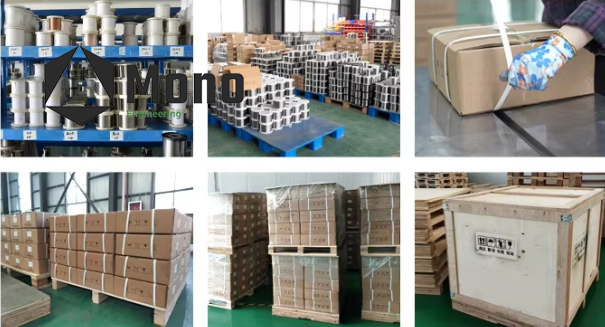
Mono supplies nickel-based superalloys and high-temperature materials for aerospace, energy and industrial applications. For Inconel 713C, we support customers with casting material supply, customized components and manufacturing coordination according to engineering requirements.
With experience in specialty alloy products, Mono focuses on reliable material sourcing, technical communication and flexible export service for global customers.
For Inconel 713C Alloy requirements, please contact us at info@monokj.com and share your material specifications, component requirements or application details. Our team will provide a suitable supply solution.